Himmelsbach
Portrait #3, 2022
“The beauty of acid paper is that it’s alive. It’s different to last week. It lives, it’s fragile, it isn’t made of concrete. But at the same time, I feel the need to preserve it. Because it’s not just about the artwork, it’s about the story of the people who fall between our borders, about telling their story again. And how can we retell it? By showing these images more often. And what if the image slowly decomposes and eventually disappears?” Domenique Himmelsbach de Vries
Man has traditionally been a source of inspiration for many artists. The same goes for Domenique Himmelsbach de Vries, or Himmelsbach for short. He uses all his capacity and creativity to make work based on social involvement. He devises concepts for problem solutions and also develops ideas for social interventions, from ‘A Day of Free Help’ or the sticker and illuminated advertising ‘Asylum seekers are Okay’, to works in the public space.
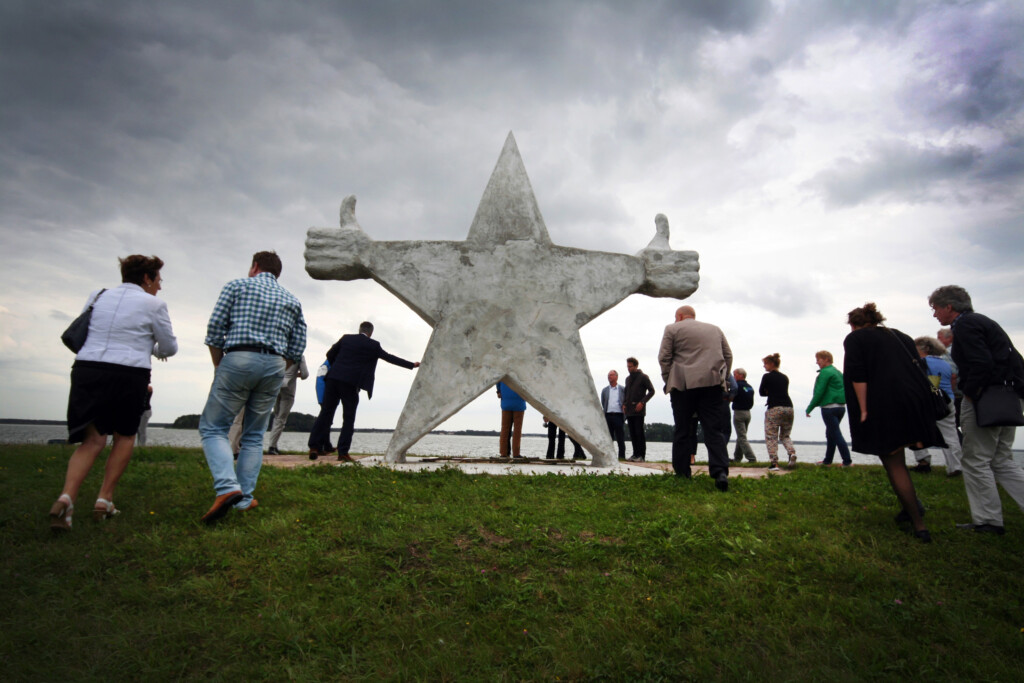
An example of the latter is the ‘Prima Mensen’ monument in Biddinghuizen, a 6m high concrete pentagram, a star with a hand with a raised thumb at two of the five points, a participatory monument where new names are added every year to, according to Himmelsbach, to rewrite our history. All his elaborated ideas and concepts together form the ‘corpus Himmelsbach’, an expanding collection of stimulating creativity.
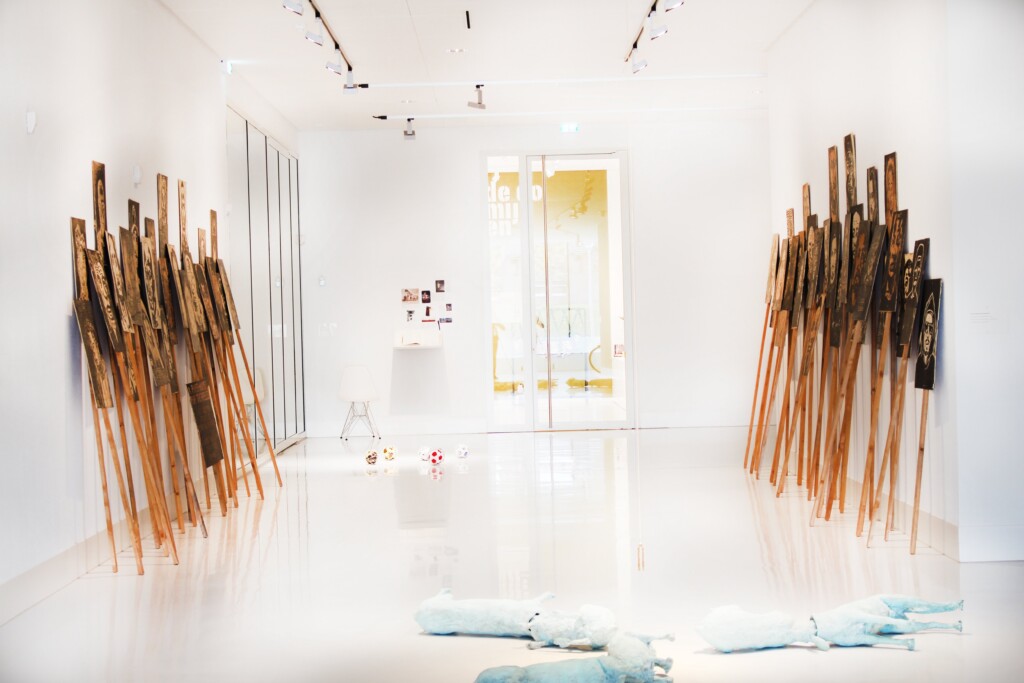
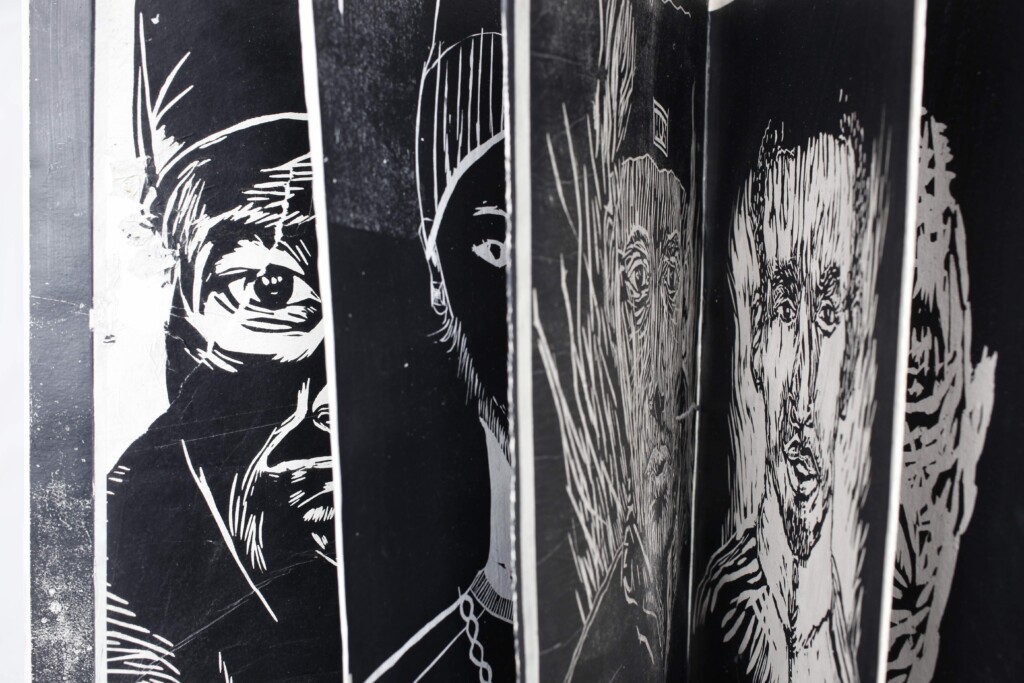
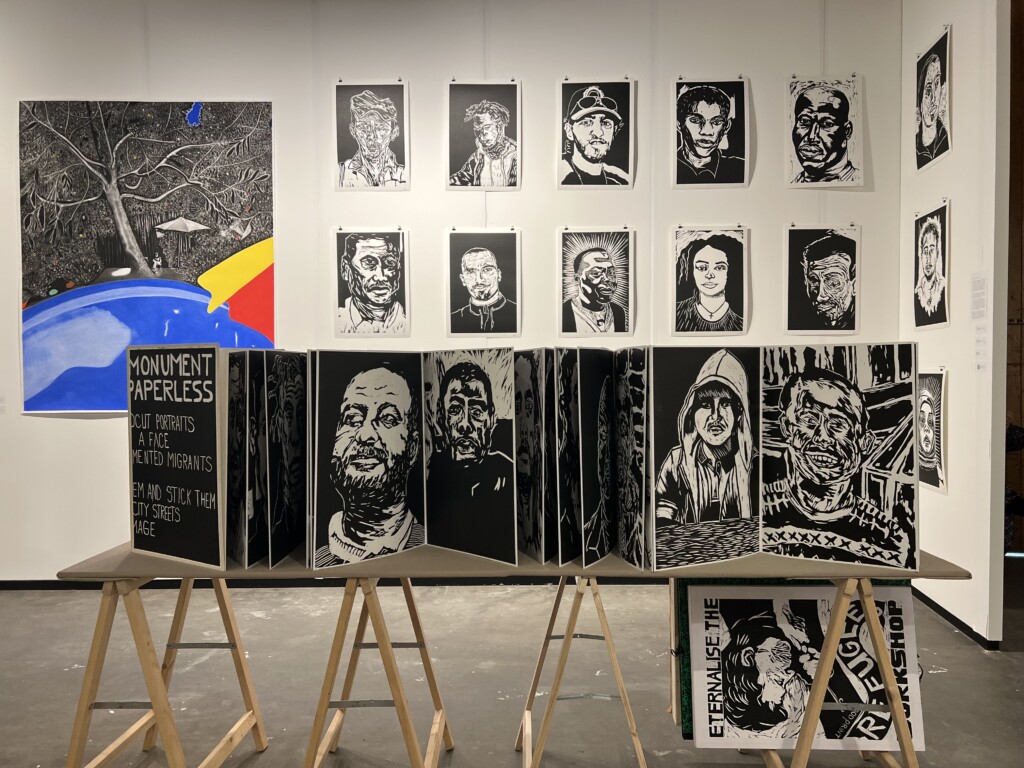
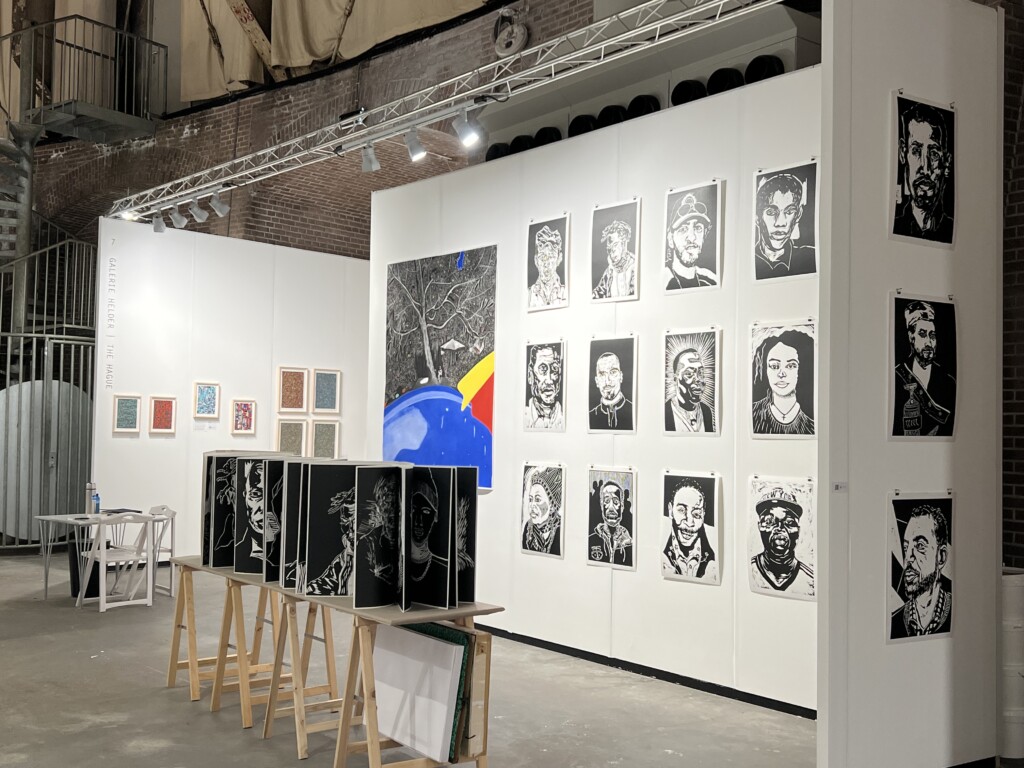
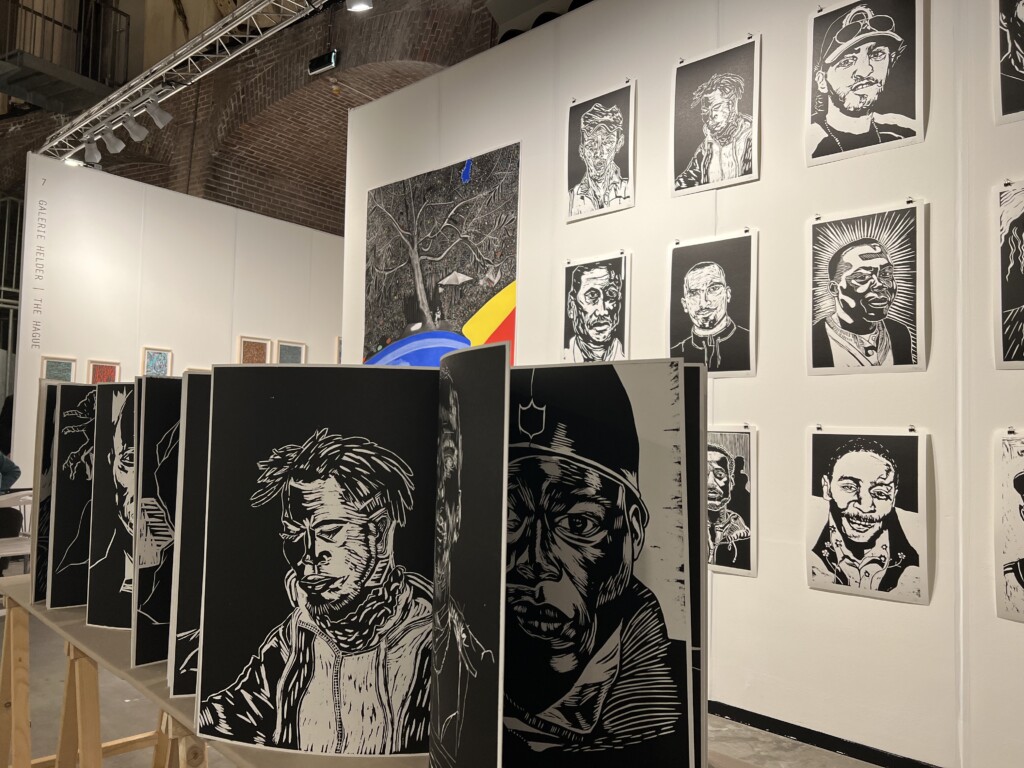
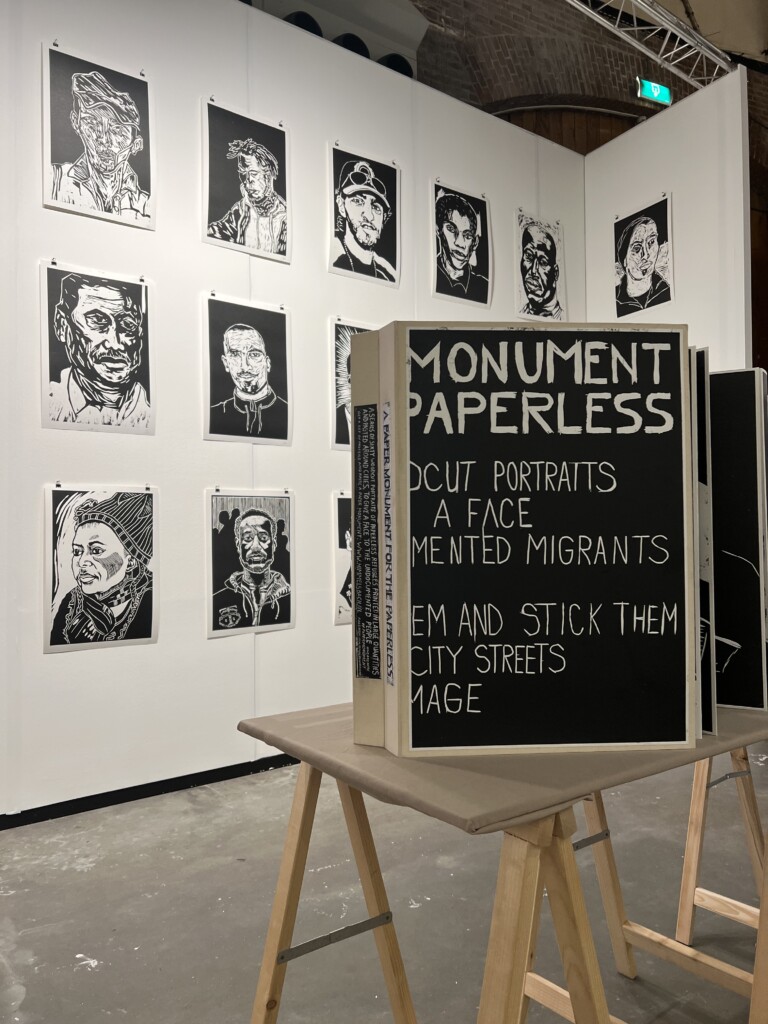
Himmelsbach also finds opportunities for connection in the collaboration with other artists. Starting out as a sense of purpose for asylum seekers, the creative work grew into an art project with higher ambitions. His “Paper Monument to the Paperless” grew out of a need to help fellow human beings regain their identity lost through some circumstance.
It would become a kind of Gesamtkunstwerk as more hands were needed to realize the idea of a paper monument. Himmelsbach observes and directs so that concrete things can arise. His way of working here is not stilted or with superior material. The technique that Himmelsbach uses is traditional wood carving. The resulting simple look delivers strong visuals to support its pressing message. Woodcuts also give unity to the various manuscripts when working in groups. This collective art practice also had extra meaning for the people portrayed. With several artists at the same time, more attention could be paid to the needs of their personal situation. Portraying their faces could be the beginning of a more dignified life.
Himmelsbach graduated visual artist at ArtEZ Zwolle in 2009. A year later he became a master of social design at the No Academy, Laboratory for Art & Society in Amsterdam. His work is included in the collections of, among others, museum De Domijnen in Sittard and the International Institute of Social History in Amsterdam. NRC Handelsblad, Het Parool and RTL Nieuws have published about his work. He has exhibited in Amsterdam, Berlin, Ghent, and New York, among others. He recently won the Museum LAM Art Entrepreneur Award 2022 and the TV episode “Daer een seigneur washes hands” of ‘The New Vermeer 2023’.